GEO vs. SEO: A Comparative Guide for Digital Marketers
Generative Engine Optimization (GEO) is the new frontier. Learn how it differs from traditional SEO and why you need a hybrid strategy to succeed.

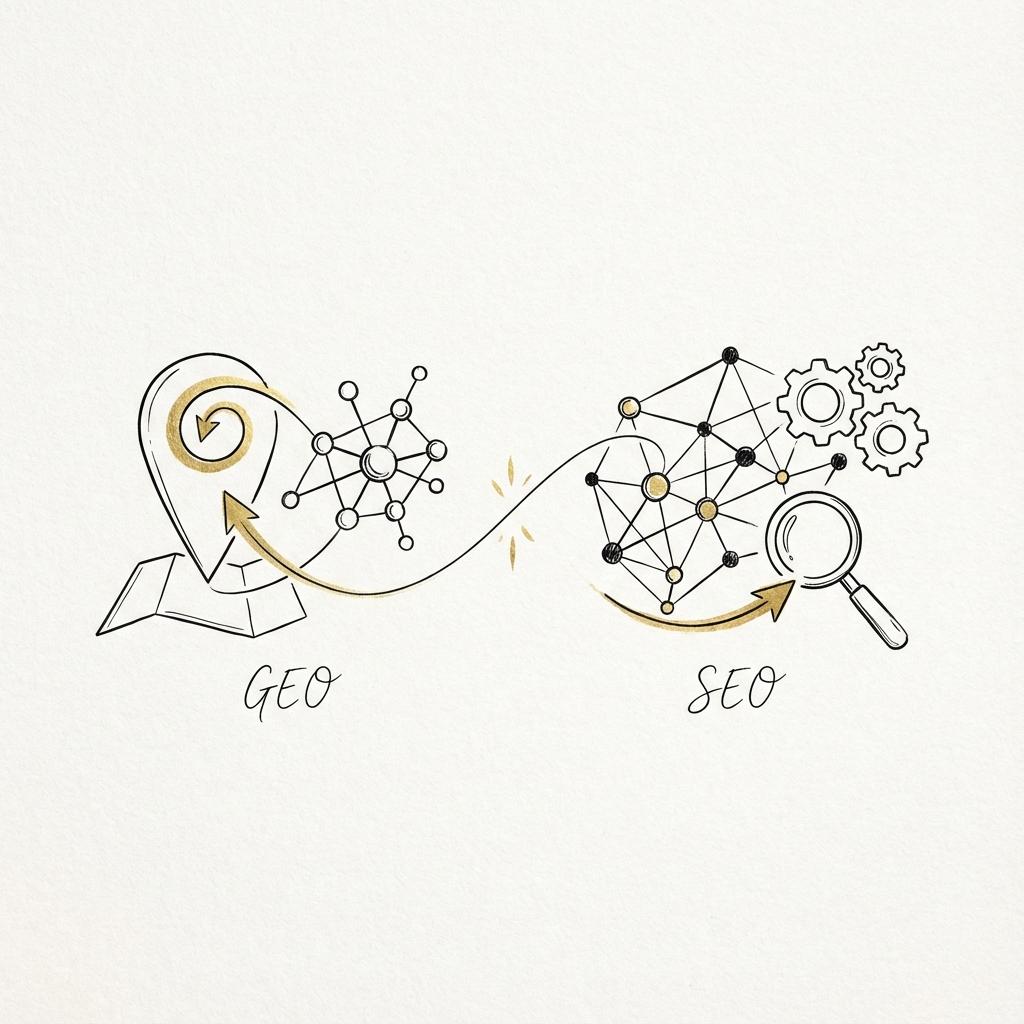
For two decades, we've optimized for search engines (SEO). Now, we must optimize for generative engines (GEO). While they share DNA, they are distinct disciplines requiring different approaches.
What is GEO?
Generative Engine Optimization (GEO) is the process of optimizing content to be cited, summarized, and recommended by AI models like ChatGPT, Claude, and Google's Gemini.
Key Differences
| Feature | Traditional SEO | GEO (Generative Engine Optimization) | | :--- | :--- | :--- | | Goal | Rank #1 on a list of links | Be the cited source in an AI answer | | Keywords | Exact match / Semantic variations | Concepts / Entities / Intent | | Content Structure | Skimmable, long-form | Dense, factual, authoritative | | Metrics | CTR, Bounce Rate, Rankings | Share of Model, Citation Frequency |
Why You Need Both
SEO isn't going away. Transactional searches ("buy nike shoes") will likely remain in a traditional interface for some time. However, informational searches ("best running shoes for flat feet") are moving to AI.
A hybrid strategy ensures you capture traffic from both sources.
- Continue with SEO best practices: Technical health, backlinks, and keyword research are the foundation.
- Layer on GEO tactics: Focus on brand entity strength, structured data, and being mentioned in "seed" data sources (like Wikipedia or major news outlets).
The Role of Authority
In GEO, authority is currency. AI models are trained to prioritize information from trusted entities. This brings us back to the importance of high-quality backlinks. Check out our list of Link Building Tools for 2026 to strengthen your authority profile.
Conclusion
Don't view GEO as a replacement for SEO, but as an expansion pack. The marketers who master both will dominate the digital landscape in the coming years.


![7 Best Link Building Tools for 2026 [Free + Paid]](/_next/image?url=%2Fimages%2Fblog%2Flink-building-tools-2026-v2.png&w=3840&q=75)